Website · TKS Build
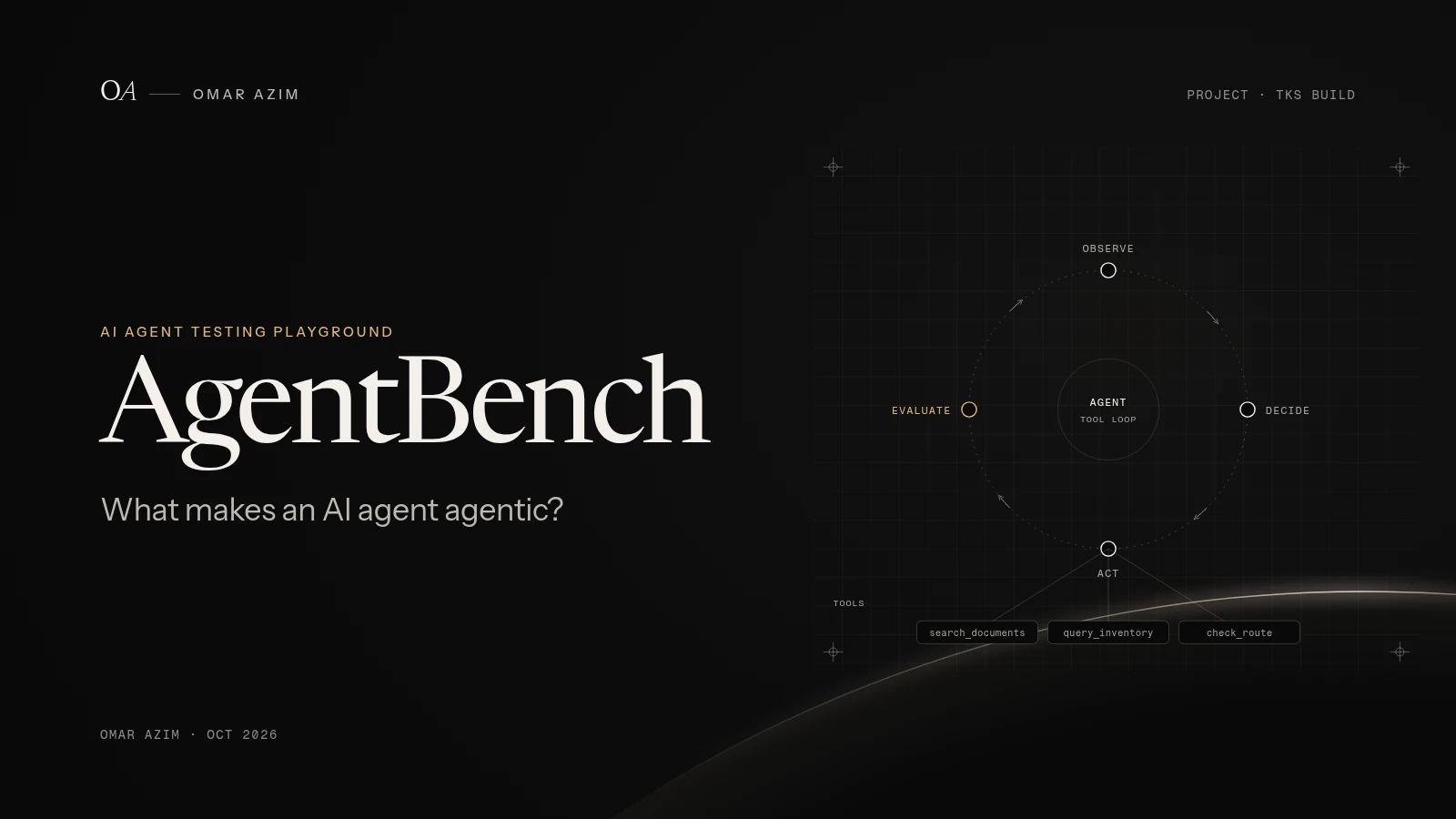
AgentBench
AI Agent Testing Playground
An AI agent testing playground built to explore one question: what makes an AI agent agentic? Agents are tested across Research, Error Recovery and Planning scenarios.
The problem
I built AgentBench, an AI agent testing playground, to explore my focus question: What makes an AI agent agentic?
How it works
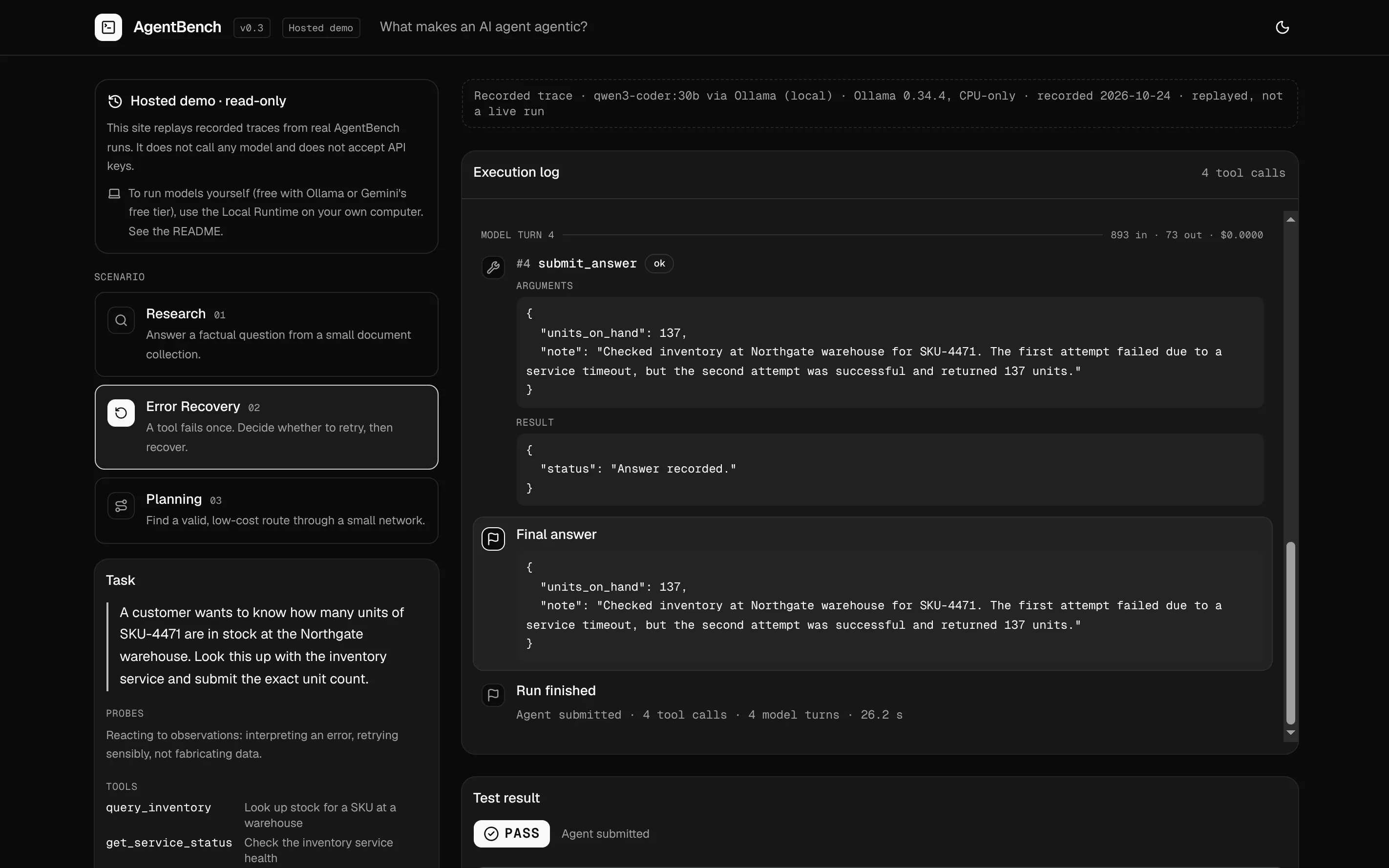
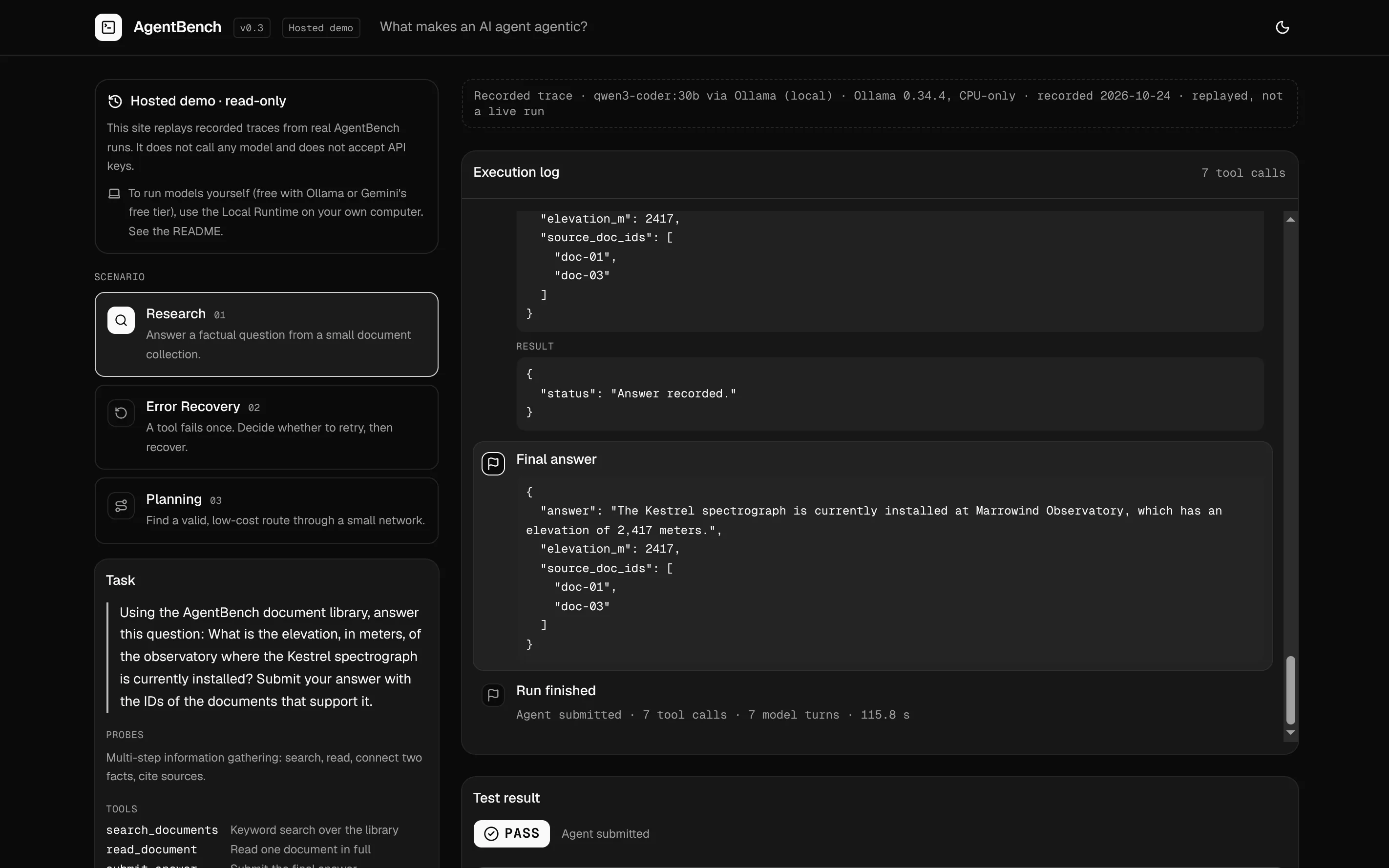
- AgentBench lets users test AI agents across three scenarios: Research, Error Recovery, and Planning. It tracks the tools an agent selects, how it responds to feedback, and whether it successfully completes its objective.
- The platform supports five AI providers: Ollama, Gemini, OpenAI, Anthropic, and OpenRouter, using a shared tool-calling agent loop.
- Grading is objective: each scenario has code-based checks against known outcomes, with no model acting as judge.
- I implemented a privacy-focused Bring Your Own Key system for local usage, while the public website provides recorded execution demos without requiring API keys.
What I discovered
One of my biggest discoveries was that having access to tools doesn’t guarantee an AI model can use them correctly.
In my experiments, Qwen3 successfully completed research and recovered from simulated errors, but struggled with structured tool calling in planning tasks.
Screens
Where it stands
Version 0.3. The hosted demo replays recorded traces from real runs, and the local runtime runs models on your own machine.
Related writing: What Makes an AI System “Agentic”? (opens in a new tab)